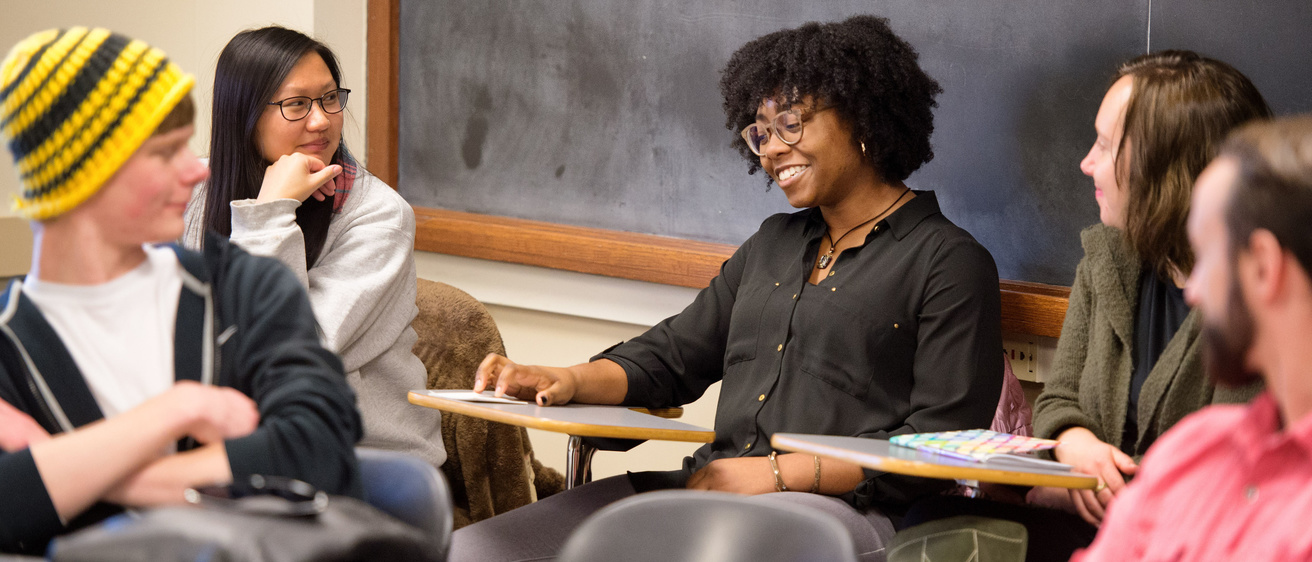
Dialogue is a skill set focused on mutual understanding, close connection, and the discovery of new possibilities, particularly useful for exploring difficult issues with others and our community.
Why is dialogue important?
“Hearing others’ stories made me feel like I understand their viewpoints more. Knowing how someone came to believe what they do makes their stance more human and relatable, even if you don’t agree.”
“Dialogue is vital for doctors, technicians, or nurses—I hope to improve skills like self-awareness, active listening, and teamwork to make me a better fit in the healthcare community"
“I want to improve my ability to just sit and listen to what others have to say without judging it at first. You have to first be a good listener in order to truly respect someone.”
Better Conversations Program Opportunities

Designing and Leading Better Conversations Workshop Series
This workshop series is for students who want to strengthen their skills in dialogue, facilitation, leadership, and collaborative problem-solving. The three workshops focus on:
- Introduction to the Discovery Mindset and Leading Better Conversations
Friday, Oct. 9 at 3:30 p.m. - Facilitating Better Conversations and Navigating Group Dynamics
Friday, Nov. 11 at 3:30 p.m. - Designing and Leading Challenging Conversations
Friday, Dec. 4 at 3:30 p.m.
You can attend one workshop or participate in the full series. Students who complete the requirements of the series will also earn a credential on their Engagement Record recognizing their participation and skill development.

Dinner Table Dialogues
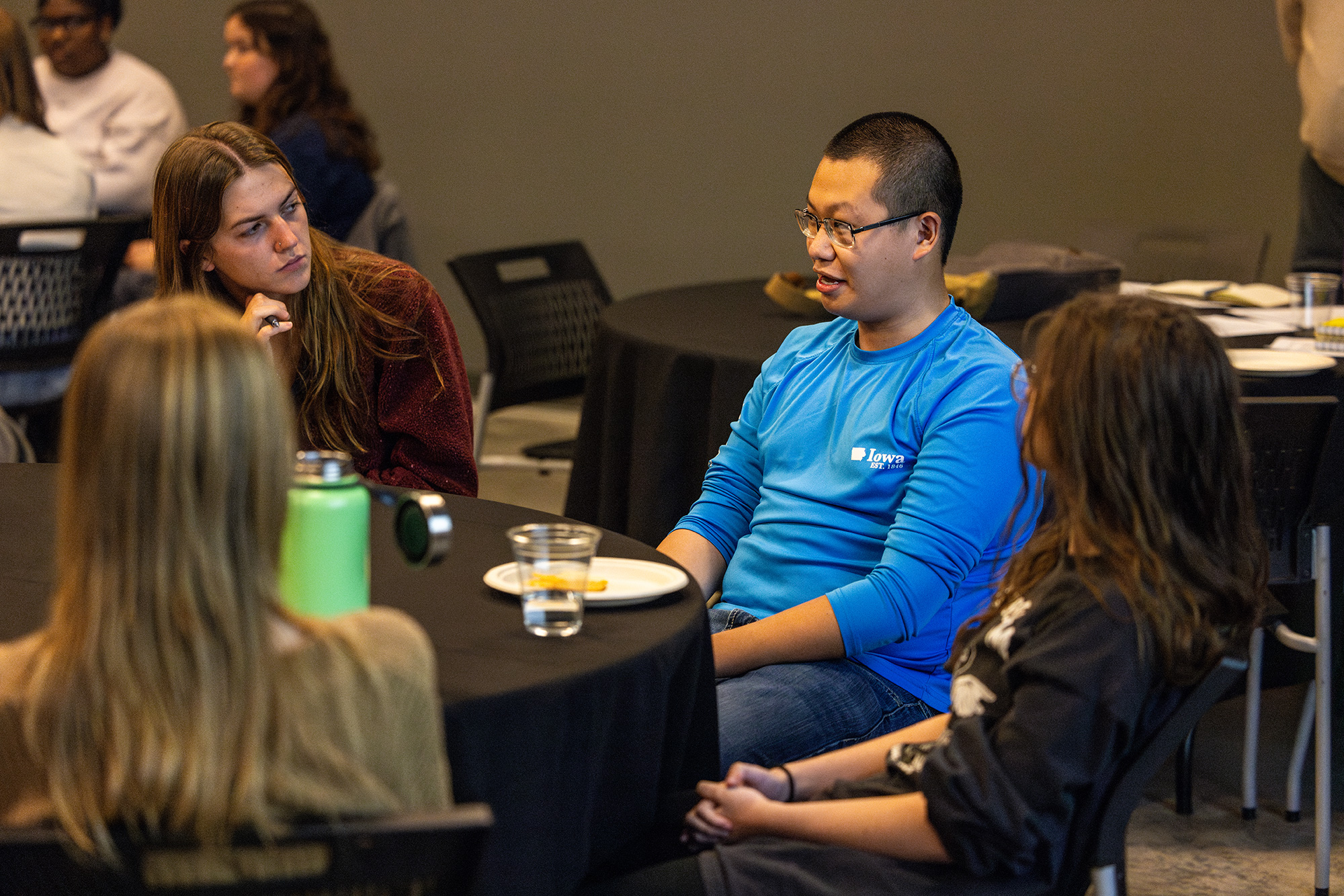
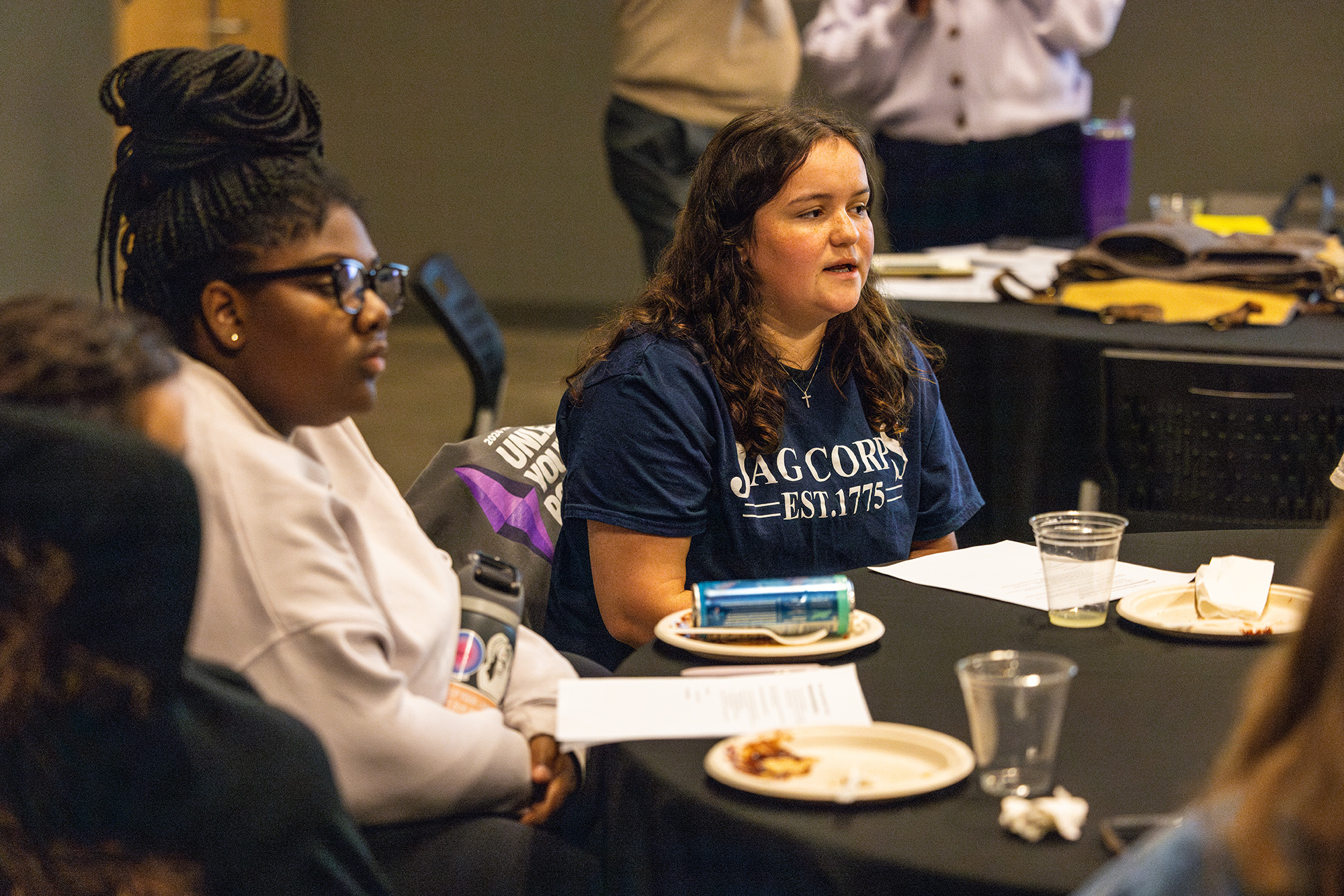
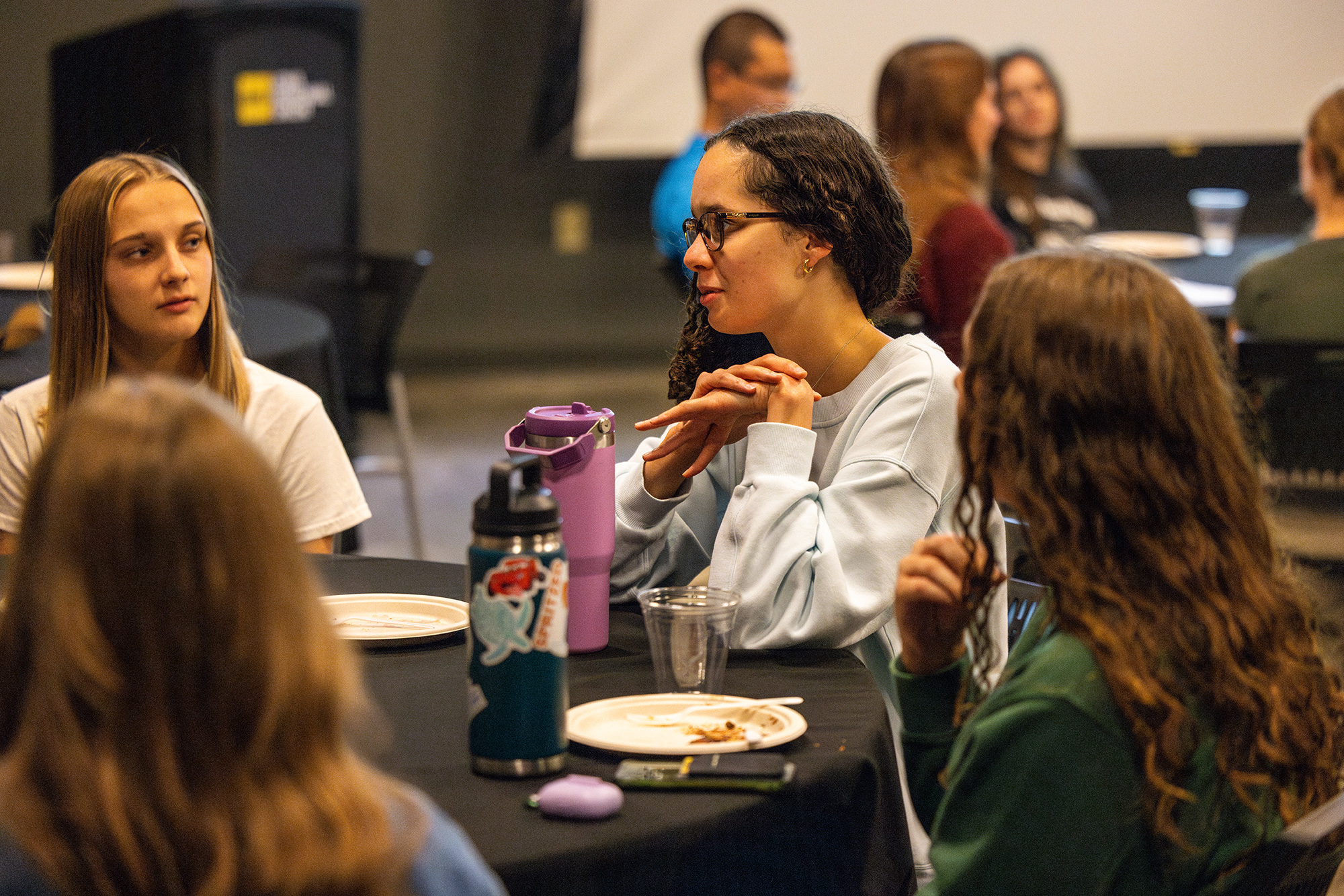
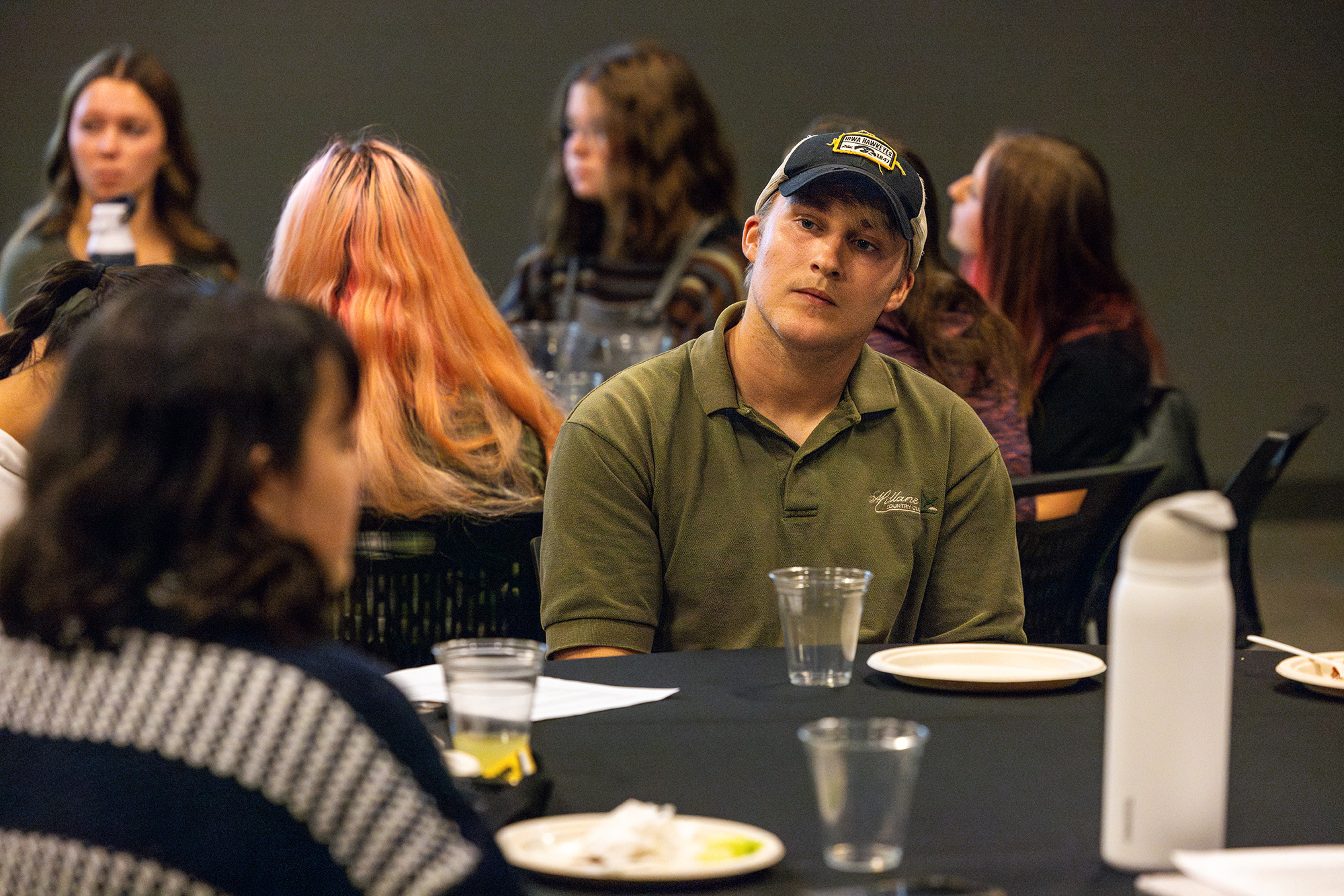
Dinner Table Dialogues provide a welcoming space for students to practice the skills of better conversations. Over a shared meal, participants engage in facilitated discussions that encourage curiosity, active listening, reflection, and connection across different perspectives and experiences. One Dinner Table Dialogue is hosted each semester. Check back here for more information about upcoming events.
- Fall 2026 Dinner Table Dialogue: Tuesday, November 10th
- Spring 2027 Dinner Table Dialogue: TBD

Residence Education Integration
Starting in fall 2026, components of the Better Conversations Program will be implemented across residence halls on campus. The Better Conversations Program in Residence Education aims to enhance students' abilities to engage in meaningful dialogue and collaborate with individuals holding differing views. By focusing on developing foundational skills for dialogue, the program aims to equip students with essential competencies for healthy and effective communication, contributing to their academic success, leadership skills, and personal development.

Training for Division of Student Life Staff
This year, we are offering a new Designing and Leading Better Conversations Workshop Series for Division of Student Life staff interested in strengthening their skills in dialogue, facilitation, and collaborative problem-solving.
The five workshops will focus on:
- The Discovery Mindset and Leading Better Conversations
- Facilitating Better Conversations
- Facilitating Participation and Navigating Group Dynamics
- Framing and Designing Purposeful Conversations, Meetings, and Events
- Navigating Tension and Challenging Conversations
Staff members may participate in individual workshops or complete the full series. Each session is designed to provide practical skills that can be applied to work with students, colleagues, teams, meetings, and programs across Student Life. Staff who complete the series may also choose to continue working with us as trainers that develop and deliver new workshops.
Contact Leadership & Engagement for more information.
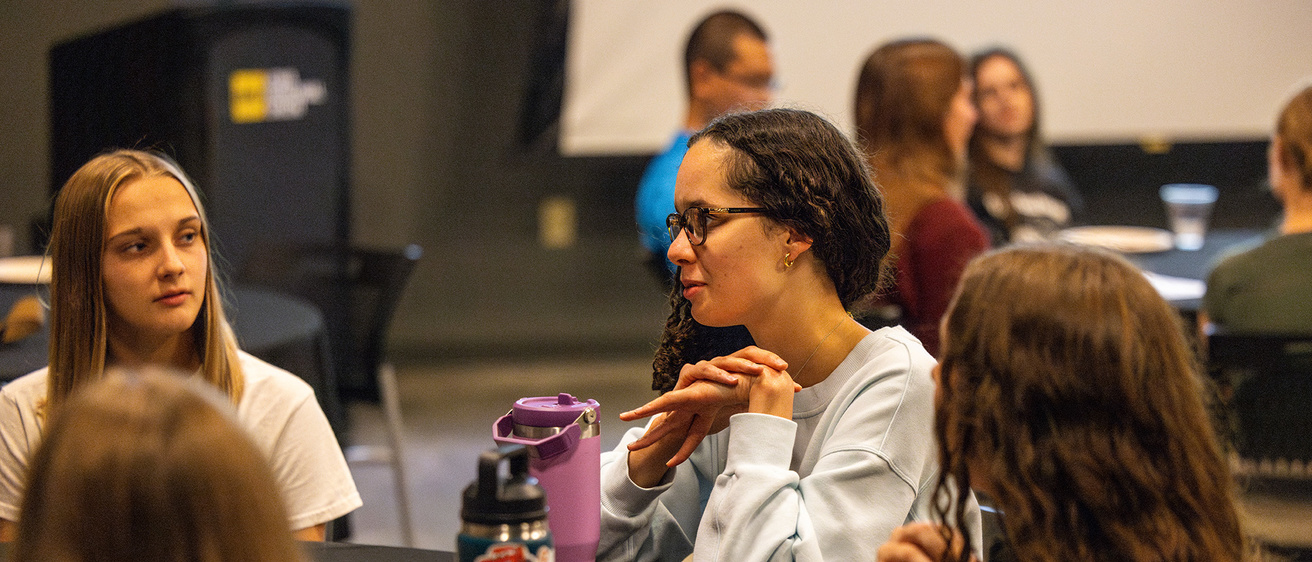
Dialogue builds bridges between people with different perspectives and views who need to solve problems together.
About the Initiative
Better Conversations Program
Building skills for dialogue, facilitation, and collaborative problem-solving.
The Better Conversations Program helps students, staff, and faculty develop the knowledge, skills, and practices needed to engage in meaningful conversations, navigate differences, and work collaboratively to address complex challenges. Through workshops, dialogue programs, and facilitated discussions, the initiative supports the development of communication, leadership, facilitation, and collaborative problem-solving skills that contribute to individual growth, stronger communities, and student success.
At the University of Iowa, better conversations are more than effective communication. They create opportunities for learning, strengthen relationships, foster participation, and help individuals work across differing perspectives with curiosity, understanding, and purpose. Whether in classrooms, residence halls, student organizations, workplaces, or community settings, these skills are essential for leadership, civic participation, and future career success.
Why Better Conversations Matter
Conversations shape how we learn, build relationships, make decisions, and address challenges. Developing the ability to engage thoughtfully with others, facilitate participation, and work through differences is essential for success in organizations, communities, and future careers. The Better Conversations Program helps members of the University of Iowa community strengthen these skills through practice, reflection, and real-world application.
These experiences help students develop career-ready skills including communication, teamwork, leadership, facilitation, critical thinking, and collaborative problem-solving.
Our Approach
- Integrated Programs – Opportunities to learn and practice dialogue skills
- Campus Partnerships – Working together to foster a culture of curiosity
- Experiential Learning – Real-world experiences that prepare students for life
The Power of Mindset
Mindsets have the power to shape every conversation you have.
Warrior mindset
Warrior mindset is a focus on winning an argument and proving that we are right.
Explorer mindset
Explorer mindset is a focus on learning and understanding as much as we can about another person.
“Leadership requires the ability to communicate with individuals who are different than us. And we must be able to do that, and debate vigorously, without dehumanizing. I’m excited this initiative will teach such vital lessons.”
“I discovered my group shares similar beliefs, and that dialogue is a great way to break down our assumed differences. Going forward, I’d like to use my dialogue skills throughout my upper-level Political Science classes and in my future legal career.”